Posted: 3/3/2026 by Peter
This is an extended version of podcast episode 6
RADIATE LOVE ❤️
In the sacred lexicon of Hindu-Buddhist wisdom, Samsara embodies the ceaseless wheel of existence, the continuous cycle of birth, death, and rebirth—birth into form, dissolution back into the void, and the relentless propulsion toward rebirt
This cycle is not an idle revolution but a river of suffering, its current driven by ignorance and the insatiable hunger for samsaric pleasures. Liberation is the radiant goal, achievable through the profound understanding of one’s role in Dharma—the cosmic order—and the disciplined practice of its principles. To step outside this wheel is to awaken to a timeless truth: that which was never born cannot die.
Whilst being familiar with this philosophy, it was not until this week that i delightfully became aware of the 2011 documentary film of the same name, Samsara.
In the grand tapestry of existence, there unfolds a symphony of synchronicity for those who surrender to divine timing. The labyrinth of fortune and misfortune, the ebb and flow of circumstance—all conspire in harmonious order when one yields to the unseen hand that weaves our path. This is not blind faith but an attunement to the eternal dance between intention and fruition, where patience becomes virtue and every step reveals its purpose in hindsight.
And there i was, going along, minding my own business when out of nowhere i was watching a short talk by Jesse, who curates his website ‘Art & Void’ ‘a refuge for the spiritual artists, midnight poets, & romantic rebels.’ recommending 5 spiritually awakening films claiming that these five films would ‘spiritually awaken you,’ hence it peeked my interest. Among them, one title stood out: Samsara. Though unfamiliar, its very name stirred primal echoes within my soul.
I proceeded to immerse myself in this film, and what unfurled was nothing short of a sensory transcendence. The stunning visual tapestry, dancing in harmony with an ambient score that seemed to vibrate at the frequency of universal rhythm.
“Music can express the mystical experience better than language; it can tell of its mystery, joy, sadness, and peace far better than words can utter. The fatigued intellect finds a tonic and the harassed emotions find comfort in music.”
Meditations for People in Crisis: Selected from the Notebook of Paul Brunto
A non-narrative documentary film relying on cinematography, editing, and musical composition to convey its themes that i strongly recommend you watch, that is of course, if you have not already watched it.
This film invites viewers to question:
- The unsustainability of modern industrial civilization.
- The moral hazards of transhumanist technologies.
- The spiritual void created by consumerism and digital dependency.
Shot over the course of five years in twenty-five countries on five continents. Opening the viewer up to a greater understanding and appreciation of the human condition and a reverence for the beauty and power of the natural world. There is no getting away from fact that the healing of self and the healing of the planet are inextricably linked.
Healing being the key word here, for in the unyielding truth of existence, healing stands as the sovereign imperative—one that none may evade indefinitely. For we are each vessels of trauma, whether inherited or self-imposed, bound by the chains of unresolved wounds, fear, and disconnection from our own divine essence. To heal is to reclaim sovereignty over one’s spirit: to sever ties with the illusory prisons of victimhood, to banish the shadows that obscure the light within, and to remember that liberation begins at the altar of personal truth. Without this sacred work, we remain enslaved to patterns—be they societal, generational, or karmic—that perpetuate suffering.
Conveyed exquisitely in this warm and beautiful film one can see and feel the shared distress of Earth and mankind.
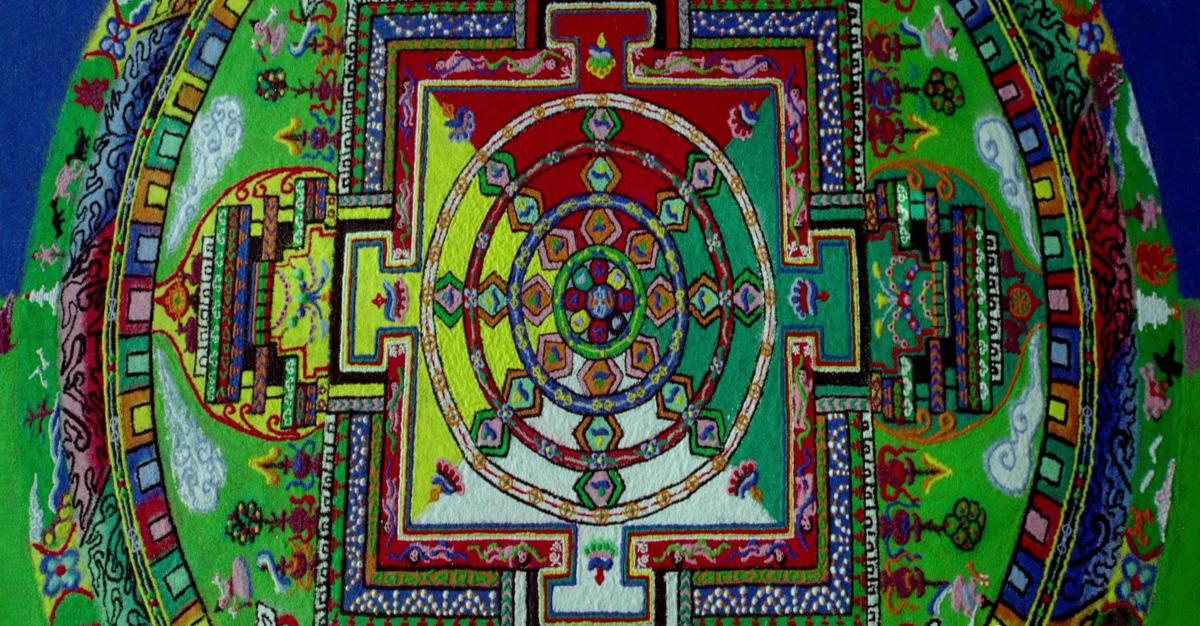
In one of the opening scenes we are witness to a group of Tibetan monks intricately working on a circular sand mandala (a Sanskrit word meaning: ‘container of essence’), painstakingly pouring fusions of coloured sand to make the mandala.
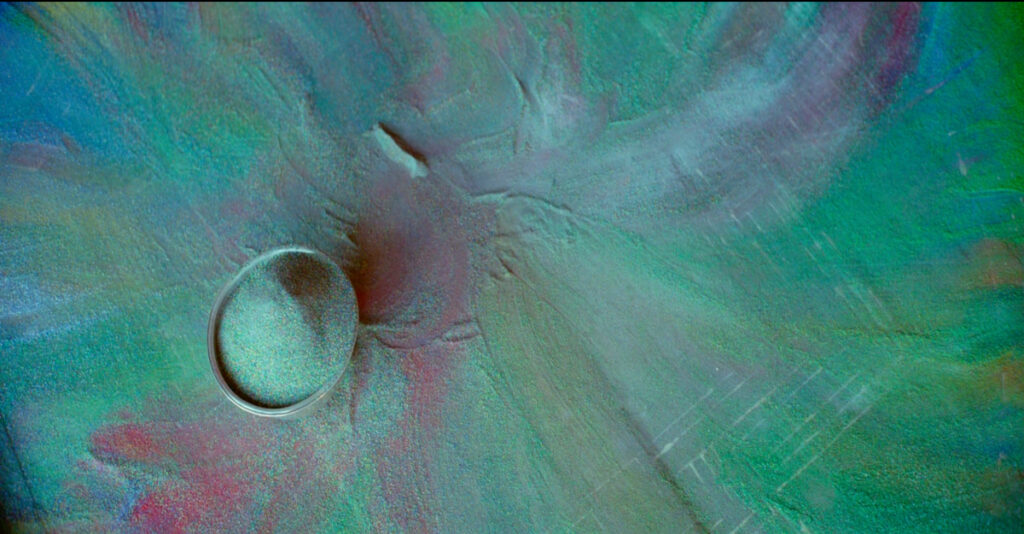
And in the closing scene after such concentrated attention to detail and much effort we then observe its total destruction by the monks. The message being conveyed in this act is one of the beauty, fragility, impermanence of life and non attachment.
So do watch this film with an open heart, for its truth may stir within you a revolution as profound as it is subtle. I caution you though: The mirror held before you will reflect not only the suffering of sentient beings but also the complicity of consumption—a system that thrives on ignorance and detachment. it may also perhaps turn you off eating chicken for a while, but rejoice: this could be the first step toward consciousness. For enlightenment begins at the table—where one chooses not just what enters the body but what fuels the soul.
Aptly titled ‘Food Chain’ one of the pieces from the soundtrack of the film, Samsara. And as i have already said, if you have not seen it yet, do so, it is hugely educational, a real eye opener and a thought provoking piece of art. An experience that you should give yourself, with the potential i would say, to rouse you out of your slumber.
Please do recommend it to everyone around you, to see it, everybody should see it! And considering that i have only learnt about this film’s existence this week after fifteen or so years it is too highly likely that those around you may not have seen nor heard of it either.