posted 18/1/2026 11:11 by Peter Wynne – 7 minute read
RADIATE LOVE ❤️
This article is an extended theme from podcast: season 1 episode 1
Preface
Today the 18th of January 2026 on the occasion of the 6th anniversary of my mother Barbara’s passing whom regrettably i had not seen in almost six decades. i was only seven years old at the time when she came to visit me as i lay in my hospital bed with hepatitis which i had contracted at the orphanage. She arrived with her then companion, John, and she was pregnant with the twins whom i would never know.
Running a fine-toothed comb through my mop of ginger locks to remove head lice, (nits) that had taken up residence there. That instance was our last physical encounter; it was to be the last time i would see her physically. It is said that she wished to take me with her, but my father resisted and maybe this was for the better.
Yet, though time and distance stretched between us, I feel her spirit close by me at all times now—an unseen yet palpable presence that has become a constant companion.
Prague
Prague, with its rich history and architectural beauty, serves as a microcosm for the human journey—particularly when encountered through the lens of fear. The word “neboj” (Czech for “Do not be afraid, have no fear”) is inscribed above the entrance to the Žižkov Pass, a subterranean pedestrian tunnel connecting the districts of Žižkov and Karlín, which are separated by the Vítkov Hill. This structure is far more than mere infrastructure; it embodies a profound philosophical truth: life is a journey through tunnels in which we cannot fully see, where visibility is obscured and uncertainty looms large.
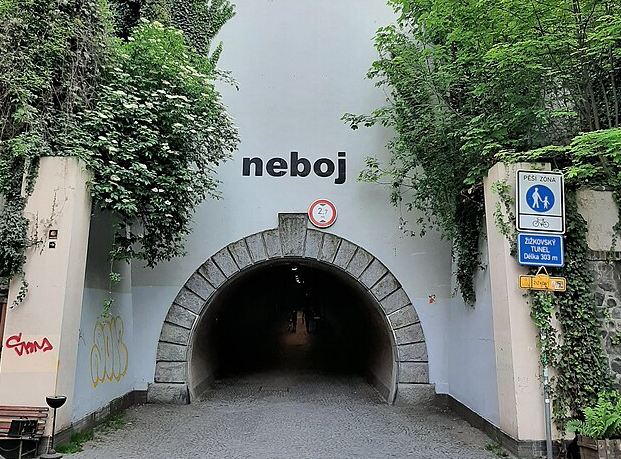
For those who have traversed this tunnel—whether physically or metaphorically—the inscription “neboj” acts as both a call to courage and a testament to resilience. The tunnel’s bend at its midpoint, ensures that neither the entrance nor the exit is visible, stirring unease even in the most stoic soul. Yet it stands as an unmistakable symbol of human perseverance—just as Prague itself has weathered centuries of occupation, war, and oppression while retaining its strength and beauty.
Fear: A Biological and Psychological Time Bomb
The psychological and physiological consequences of chronic fear are well-documented. American psychologist Martin Seligman coined the term “learned helplessness” to describe the internalized powerlessness that arises from repeated exposure to uncontrollable stressors—such as childhood trauma, abuse, or systemic oppression. For many years, I too was captive to this phenomenon. A simple knock at the door would trigger an automatic survival response, sending me scurrying into the wardrobe while my mind screamed “Go away! Go away!” My spirit shrunk to a fraction of its potential, and fear became the defining force in my life.
Scientific research confirms that prolonged exposure to fear accelerates biological degeneration by disrupting nearly every major system in the body. Chronic stress elevates cortisol levels, suppresses immune function, and increases susceptibility to pathogenic microbes—effectively making the individual a host for disease. Fear is not merely an abstract emotion; it is a physiologically destructive force.
The Path from Paralysis to Empowerment
Extricating oneself from fear’s grip requires tenacity, unwavering resolve, and time. My own journey was excruciating—painful, even debilitating at times—yet in hindsight, it became evident that this odyssey was not merely an endurance test but a spiritual awakening. The fragilities of my psyche were replaced with an indomitable strength, and those who now enter my sphere perceive no trace of my former susceptibilities. I am reborn—empowered and transformed into a force to be reckoned with.
Childhood Trauma as a Catalyst for Psychological Scarring
Permit me a young childhood reminiscence if you may—less to wallow in memory than to illuminate how fear’s tendrils first took root within me. I assure you that i harbour no attachment to this or any other episode from this period; it is past, healed, forgiven. My mother, Barbara—a victim herself of unspoken wounds—who sadly never found respite from her own demons. i love her dearly, i really do.

On dark nights, she would lift me from my bed and sit me at the top of our two-story staircase. A crucifix hung on the wall at my back. Below, the front door stood ajar, with spectral figures—the local priest or police officers—waiting to punish me and take me away for sins I did not know I had committed.
“Are you going to be a good boy?” she would ask, her voice echoing through the night as my tiny frame convulsed in terror, curling inwards as if trying to disappear, the fear being raw and unfiltered. This was no isolated incident; it became a pattern of cruelty that shaped my psyche into a vessel of fear. A moment that lingers long after the scene itself has faded.
In my poem “Tír na nÓg” you will find the line “the priest taking me away” serving as a stark reminder of those nights.
While my experience may seem mild compared to the ferocious cruelties many children have to endure, it is critical to recognize that trauma—no matter its scale—has real, lasting consequences. The damage inflicted on one’s psyche during formative years can manifest in ways that persist into adulthood unless addressed.
The Power of Love as the Antidote to Fear
So how does one recover from such barbaric depravity? Only through what Dr. David R. Hawkins describes as “the miraculous”—love. In his words, even the most ferociously angry, depressed, or suicidal individual can be transformed into a beautiful person by love alone.
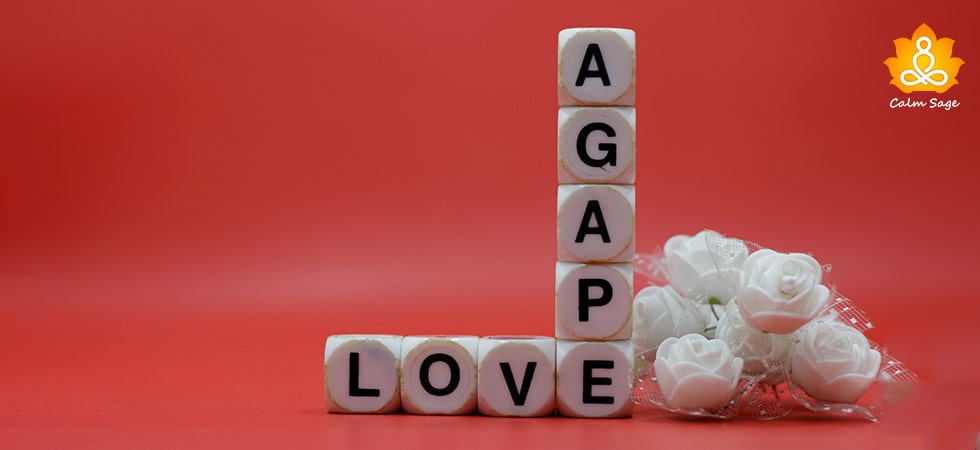
Agape love the highest form of love, is characterised by selflessness sacrifice and unconditional love. Agape love is not born from emotions or feelings but it’s a deliberate choice to love all, a perfect love that comes from God himself.
The path to overcoming fear is not an intellectual exercise; it is a deeply emotional and spiritual journey. It requires:
- Acknowledgment of the past without attachment—recognizing that while trauma has shaped you, it does not define you.
- Unwavering commitment to self-love and self-compassion—treating oneself with the same care and patience one would offer a child in need.
- The courage to face uncertainty—just as the Žižkov Pass tunnel demands that we navigate its darkness without knowing what lies ahead, life requires us to do the same.
Practical Steps for Overcoming Fear
For those still ensnared by fear’s paralyzing grip, I offer these steps:
- Recognize and Name Your Fear – Acknowledge that your fear is real but not all-encompassing. It does not define you.
- Engage in Daily Acts of Courage – Start small—whether it’s facing a task you’ve been avoiding or speaking up in a difficult conversation. Each act builds resilience.
- Practice Mindfulness and Grounding Techniques – Fear thrives in the mind; mindfulness (even simple deep breathing exercises) can help recenter your nervous system.
- Surround Yourself with Love and Support – Community, whether family, friends, or a support group, provides a safety net when fear threatens to overwhelm you.
- Seek Out Nature’s Healing Power – Time in nature has been shown to reduce cortisol levels and restore balance to the nervous system.
The Ultimate Truth: You Are Not Defined by Your Fear
In conclusion, “neboj”—”Do not be afraid, have no fear”—is more than a word inscribed on a tunnel wall. It is an affirmation of human potential, a reminder that even in darkness, we possess the strength to persist. Just as Prague has risen from centuries of occupation with its beauty intact, so too can each of us overcome fear’s grip and emerge empowered, resilient, and free.
The path to freedom from fear is not linear—it is a spiral of growth, where each descent into uncertainty reveals new layers of strength. The key lies in embracing the call to courage when visibility wanes and uncertainty looms.
Because what is life if not a journey through tunnels we cannot fully see? What greater wisdom could one seek than the emboldening encouragement of “Do not be afraid, have no fear.”